
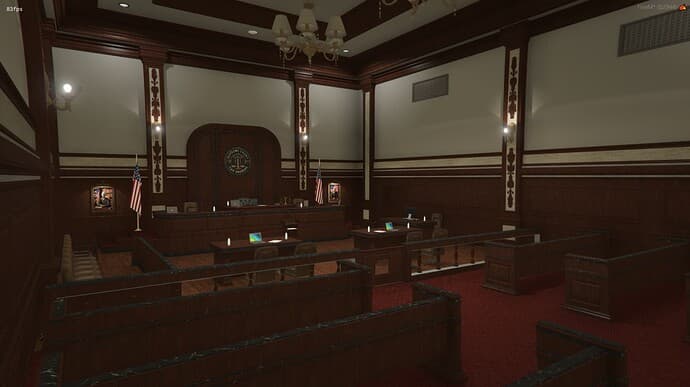
Department of Justice
Welche Paragraphen gelten?
Sagen Sie, was passiert ist — und Sie bekommen die Paragraphen des kalifornischen Gesetzes, die dafür gelten. Jeden mit Fundstelle zum Kopieren.
1Was ist passiert?
Schreiben Sie in eigenen Worten, was passiert ist. Ganze Sätze sind richtig; steckt mehr als eine Tat darin, werden sie getrennt. Ein Stichwort geht genauso — „Raub“, „Einbruch“, „211“.
Zum Beispiel
- „Ich hab ein Auto geklaut und bin dann vor der Polizei abgehauen“
- „Ich bin besoffen gefahren“
- „Einbruch in ein Haus, dabei was mitgenommen“
- „Ich hab jemanden geschlagen“
- „Nach dem Unfall bin ich abgehauen“
Oft gesucht
1374 Taten gefunden · Seite 9 von 115
Kautionsvermittlung durch Gefangene
Ein zugelassener Kautionsvermittler darf keine inhaftierte Person beschäftigen, beauftragen, anwerben oder ihr Zahlungen, Vergütungen oder Vorteile versprechen, damit diese für ihn in der Haftanstalt Kautionsgeschäfte anwirbt. Eine Verfolgung nach dem Versicherungsrecht bleibt möglich.
Strafebis zu 6 Monate oder bis $1.000
Cal. Penal Code § Mehr dazuschliessen
Cal. Penal Code § 160 — Kautionsvermittlung durch GefangeneWortlautzu
Ein zugelassener Kautionsvermittler darf keine inhaftierte Person beschäftigen, beauftragen, anwerben oder ihr Zahlungen, Vergütungen oder Vorteile versprechen, damit diese für ihn in der Haftanstalt Kautionsgeschäfte anwirbt. Eine Verfolgung nach dem Versicherungsrecht bleibt möglich.
Strafe auf Deutsch —
Als Vergehen (misdemeanor) strafbar.
Wortlaut im Gesetz (englisch)
(a) No bail licensee may employ, engage, solicit, pay, or promise any payment, compensation, consideration or thing of value to any person incarcerated in any prison, jail, or other place of detention for the purpose of that person soliciting bail on behalf of the licensee. A violation of this section is a misdemeanor.
Ganzer Gesetzestext (englisch)
(a) No bail licensee may employ, engage, solicit, pay, or promise any payment, compensation, consideration or thing of value to any person incarcerated in any prison, jail, or other place of detention for the purpose of that person soliciting bail on behalf of the licensee. A violation of this section is a misdemeanor. (b) Nothing in this section shall prohibit prosecution under Section 1800 or 1814 of the Insurance Code, or any other applicable provision of law.
Kein eigenes Strafmaß im Text. Dann gilt Cal. Penal Code § 19: bis 6 Monate Haft oder bis $1.000 — diese Zahlen stehen dort, nicht hier.
Straftaten gegen die Rechtspflege · Teil 1
Bestechung und Bestechlichkeit kommunaler Mandatsträger
Wer einem Mitglied eines Stadtrats, Kreistags oder Aufsichtsgremiums eines County, einer Stadt oder einer öffentlichen Körperschaft Bestechungsgeld gibt oder anbietet, um dessen Verhalten in einer anstehenden Angelegenheit korrupt zu beeinflussen, macht sich strafbar. Ebenso strafbar ist das Mandatsmitglied, das einen solchen Vorteil annimmt oder anzunehmen zusagt, damit seine Stimme, Meinung oder Amtshandlung beeinflusst wird.
Strafenormalerweise 3 Jahre Gefängnis
Cal. Penal Code § Mehr dazuschliessen
Der Strafrahmen im Gesetz
2·3·4 JahreWarum drei Zahlen??weniger
Das Gericht nimmt eine dieser drei Zahlen. Dazwischen gibt es nichts — „2 · 3 · 4 Jahre“ heisst nicht „von … bis“.
- Die mittlere ist der Normalfall. Sie gilt, solange nichts dagegenspricht.
- Die obere nur, wenn es besonders schlimm war — und das muss bewiesen sein. „Wahrscheinlich“ reicht nicht.
- Die untere, wenn etwas dafür spricht: erlittenes Trauma, Jugend zur Tatzeit, Gewalt in der Partnerschaft.
Im Gesetz: „two, three or four years“
Cal. Penal Code § 165 — Bestechung und Bestechlichkeit kommunaler MandatsträgerWortlautzu
Wer einem Mitglied eines Stadtrats, Kreistags oder Aufsichtsgremiums eines County, einer Stadt oder einer öffentlichen Körperschaft Bestechungsgeld gibt oder anbietet, um dessen Verhalten in einer anstehenden Angelegenheit korrupt zu beeinflussen, macht sich strafbar. Ebenso strafbar ist das Mandatsmitglied, das einen solchen Vorteil annimmt oder anzunehmen zusagt, damit seine Stimme, Meinung oder Amtshandlung beeinflusst wird.
Strafe auf Deutsch —
Freiheitsstrafe im Staatsgefängnis von zwei, drei oder vier Jahren; zusätzlich Amtsverlust.
Wortlaut im Gesetz (englisch)
Every person who gives or offers a bribe to any member of any common council, board of supervisors, or board of trustees of any county, city and county, city, or public corporation, with intent to corruptly influence such member in his action on any matter or subject pending before, or which is afterward to be considered by, the body of which he is a member, and every member of any of the bodies mentioned in this section who receives, or offers or agrees to receive any bribe upon any understanding that his official vote, opinion, judgment, or action shall be influenced thereby, or shall be given in any particular manner or upon any
Ganzer Gesetzestext (englisch)
Every person who gives or offers a bribe to any member of any common council, board of supervisors, or board of trustees of any county, city and county, city, or public corporation, with intent to corruptly influence such member in his action on any matter or subject pending before, or which is afterward to be considered by, the body of which he is a member, and every member of any of the bodies mentioned in this section who receives, or offers or agrees to receive any bribe upon any understanding that his official vote, opinion, judgment, or action shall be influenced thereby, or shall be given in any particular manner or upon any particular side of any question or matter, upon which he may be required to act in his official capacity, is punishable by imprisonment in the state prison for two, three or four years, and upon conviction thereof shall, in addition to said punishment, forfeit his office, and forever be disfranchised and disqualified from holding any public office or trust.
Straftaten gegen die Rechtspflege · Teil 1
Missachtung des Gerichts
Strafbar ist unter anderem ungebührliches, störendes oder respektloses Verhalten in einer Gerichtsverhandlung, Lärm oder Störungen, die den Ablauf unterbrechen, sowie das vorsätzliche Zuwiderhandeln gegen den Wortlaut einer gerichtlichen Anordnung. Für Verstöße gegen Schutz- und Kontaktverbotsanordnungen und für Kontaktaufnahmen zu Opfern nach einer Vorverurteilung wegen Nachstellung gelten besondere, strengere Regelungen.
Strafenormalerweise 2 Jahre Gefängnis· dazu $1.000 – $5.000
Cal. Penal Code § Mehr dazuschliessen
Der Strafrahmen im Gesetz
16 Monate·2 Jahre·3 JahreWarum drei Zahlen??weniger
Das Gericht nimmt eine dieser drei Zahlen. Dazwischen gibt es nichts — „16 Monate · 2 Jahre · 3 Jahre“ heisst nicht „von … bis“.
- Die mittlere ist der Normalfall. Sie gilt, solange nichts dagegenspricht.
- Die obere nur, wenn es besonders schlimm war — und das muss bewiesen sein. „Wahrscheinlich“ reicht nicht.
- Die untere, wenn etwas dafür spricht: erlittenes Trauma, Jugend zur Tatzeit, Gewalt in der Partnerschaft.
Im Gesetz: „16 months or two or three years“
Cal. Penal Code § 166 — Missachtung des GerichtsWortlautzu
Strafbar ist unter anderem ungebührliches, störendes oder respektloses Verhalten in einer Gerichtsverhandlung, Lärm oder Störungen, die den Ablauf unterbrechen, sowie das vorsätzliche Zuwiderhandeln gegen den Wortlaut einer gerichtlichen Anordnung. Für Verstöße gegen Schutz- und Kontaktverbotsanordnungen und für Kontaktaufnahmen zu Opfern nach einer Vorverurteilung wegen Nachstellung gelten besondere, strengere Regelungen.
Strafe auf Deutsch —
Grundfall: als Vergehen (misdemeanor) strafbar. Kontaktaufnahme zu einem Opfer bei Vorverurteilung nach Section 646.9: Freiheitsstrafe im Bezirksgefängnis bis zu einem Jahr, Geldstrafe bis zu 5.000 Dollar oder beides. Vorsätzlicher und wissentlicher Verstoß gegen eine Schutz- oder Kontaktverbotsanordnung: Freiheitsstrafe im Bezirksgefängnis bis zu einem Jahr, Geldstrafe bis zu 1.000 Dollar oder beides.
Wortlaut im Gesetz (englisch)
(a) Except as provided in subdivisions (b), (c), and (d), a person guilty of any of the following contempts of court is guilty of a misdemeanor:
(b) (1) A person who is guilty of contempt of court under paragraph (4) of subdivision (a) by willfully contacting a victim by telephone or mail, social media, electronic communication, or electronic communication device, or directly, and who has been previously convicted of a violation of Section 646.9 shall be punished by imprisonment in a county jail for not more than one year, by a fine of no more than five thousand dollars ($5,000), or by both that fine and imprisonment.
(c) (1) Notwithstanding paragraph (4) of subdivision (a), a willful and knowing violation of a protective order or stay-away court order described as follows shall constitute contempt of court, a misdemeanor, punishable by imprisonment in a county jail for not more than one year, by a fine of not more than one thousand dollars ($1,000), or by both that imprisonment and fine:
(4) A second or subsequent conviction for a violation of an order described in paragraph (1) occurring within seven years of a prior conviction for a violation of any of those orders and involving an act of violence or “a credible threat” of violence, as provided in subdivision (c) of Section 139, is punishable by imprisonment in a county jail not to exceed one year, or in the state prison for 16 months or two or three years.
Ganzer Gesetzestext (englisch)
(a) Except as provided in subdivisions (b), (c), and (d), a person guilty of any of the following contempts of court is guilty of a misdemeanor: (1) Disorderly, contemptuous, or insolent behavior committed during the sitting of a court of justice, in the immediate view and presence of the court, and directly tending to interrupt its proceedings or to impair the respect due to its authority. (2) Behavior specified in paragraph (1) that is committed in the presence of a referee, while actually engaged in a trial or hearing, pursuant to the order of a court, or in the presence of a jury while actually sitting for the trial of a cause, or upon an inquest or other proceeding authorized by law. (3) A breach of the peace, noise, or other disturbance directly tending to interrupt the proceedings of the court. (4) Willful disobedience of the terms, as written, of a process or court order or out-of-state court order, lawfully issued by a court, including orders pending trial. (5) Resistance willfully offered by a person to the lawful order or process of a court. (6) The contumacious and unlawful refusal of a person to be sworn as a witness or, when so sworn, the like refusal to answer a material question. (7) The publication of a false or grossly inaccurate report of the proceedings of a court. (8) Presenting to a court having power to pass sentence upon a prisoner under conviction, or to a member of the court, an affidavit, testimony, or representation of any kind, verbal or written, in aggravation or mitigation of the punishment to be imposed upon the prisoner, except as provided in this code. (9) Willful disobedience of the terms of an injunction that restrains the activities of a criminal street gang or any of its members, lawfully issued by a court, including an order pending trial. (b) (1) A person who is guilty of contempt of court under paragraph (4) of subdivision (a) by willfully contacting a victim by telephone or mail, social media, electronic communication, or electronic communication device, or directly, and who has been previously convicted of a violation of Section 646.9 shall be punished by imprisonment in a county jail for not more than one year, by a fine of no more than five thousand dollars ($5,000), or by both that fine and imprisonment. (2) For the purposes of sentencing under this subdivision, each contact shall constitute a separate violation of this subdivision. (3) The present incarceration of a person who makes contact with a victim in violation of paragraph (1) is not a defense to a violation of this subdivision. (4) For purposes of this subdivision, the following definitions shall apply: (A) “Social media” has the same definition as in Section 632.01. (B) “Electronic communication” has the same definition as in Section 646.9. (C) “Electronic communication device” has the same definition as in Section 646.9. (c) (1) Notwithstanding paragraph (4) of subdivision (a), a willful and knowing violation of a protective order or stay-away court order described as follows shall constitute contempt of court, a misdemeanor, punishable by imprisonment in a county jail for not more than one year, by a fine of not more than one thousand dollars ($1,000), or by both that imprisonment and fine: (A) An order issued pursuant to Section 136.2. (B) An order issued pursuant to paragraph (2) of subdivision (a) of Section 1203.097. (C) An order issued after a conviction in a criminal proceeding involving elder or dependent adult abuse, as defined in Section 368. (D) An order issued pursuant to Section 1201.3. (E) An order described in paragraph (3). (F) An order issued pursuant to subdivision (j) of Section 273.5. (2) If a violation of paragraph (1) results in a physical injury, the person shall be imprisoned in a county jail for at least 48 hours, whether a fine or imprisonment is imposed, or the sentence is suspended. (3) Paragraphs (1) and (2) apply to the following court orders: (A) An order issued pursuant to Section 6320 or 6389 of the Family Code. (B) An order excluding one party from the family dwelling or from the dwelling of the other. (C) An order enjoining a party from specified behavior that the court determined was necessary to effectuate the orders described in paragraph (1). (4) A second or subsequent conviction for a violation of an order described in paragraph (1) occurring within seven years of a prior conviction for a violation of any of those orders and involving an act of violence or “a credible threat” of violence, as provided in subdivision (c) of Section 139, is punishable by imprisonment in a county jail not to exceed one year, or in the state prison for 16 months or two or three years. (5) The prosecuting agency of each county shall have the primary responsibility for the enforcement of the orders described in paragraph (1). (d) (1) A person who owns, possesses, purchases, or receives a firearm knowing that person is prohibited from doing so by the provisions of a protective order as defined in Section 136.2 of this code, Section 6218 of the Family Code, or Section 527.6 or 527.8 of the Code of Civil Procedure, shall be punished under Section 29825. (2) A person subject to a protective order described in paragraph (1) shall not be prosecuted under this section for owning, possessing, purchasing, or receiving a firearm to the extent that firearm is granted an exemption pursuant to subdivision (h) of Section 6389 of the Family Code. (e) (1) If probation is granted upon conviction of a violation of subdivision (c), the court shall impose probation consistent with Section 1203.097. (2) If probation is granted upon conviction of a violation of subdivision (c), the conditions of probation may include, in lieu of a fine, one or both of the following requirements: (A) That the defendant make payments to a domestic violence shelter-based program up to a maximum of one thousand dollars ($1,000). (B) That the defendant provide restitution to reimburse the victim for reasonable costs of counseling and other reasonable expenses that the court finds are the direct result of the defendant’s offense. (3) For an order to pay a fine, make payments to a domestic violence shelter-based program, or pay restitution as a condition of probation under this subdivision or subdivision (c), the court shall make a determination of the defendant’s ability to pay. An order to make payments to a domestic violence shelter-based program, shall not be made if it would impair the ability of the defendant to pay direct restitution to the victim or court-ordered child support. (4) If the injury to a married person is caused, in whole or in part, by the criminal acts of the person’s spouse in violation of subdivision (c), the community property shall not be used to discharge the liability of the offending spouse for restitution to the injured spouse required by Section 1203.04, as operative on or before August 2, 1995, or Section 1202.4, or to a shelter for costs with regard to the injured spouse and dependents required by this subdivision, until all separate property of the offending spouse is exhausted. (5) A person violating an order described in subdivision (c) may be punished for any substantive offenses described under Section 136.1 or 646.9. A finding of contempt shall not be a bar to prosecution for a violation of Section 136.1 or 646.9. However, a person held in contempt for a violation of subdivision (c) shall be entitled to credit for any punishment imposed as a result of that violation against a sentence imposed upon conviction of an offense described in Section 136.1 or 646.9. A conviction or acquittal for a substantive offense under Section 136.1 or 646.9 shall be a bar to a subsequent punishment for contempt arising out of the same act.
: Waffenverbot · Bewaehrungsauflagen · Opferentschaedigung
Straftaten gegen die Rechtspflege · Teil 1 · Geldstrafe $1.000 – $5.000
Abhören oder Aufzeichnen der Geschworenenberatung
Wer ohne Wissen und Zustimmung der Jury deren Beratung oder Abstimmung ganz oder teilweise aufzeichnet oder aufzuzeichnen versucht oder als Nichtmitglied die Beratung oder Abstimmung abhört, beobachtet oder dies versucht, macht sich strafbar. Das Anfertigen von Notizen durch einen Geschworenen für seine eigene Aufgabe bleibt erlaubt.
Strafebis zu 6 Monate oder bis $1.000
Cal. Penal Code § Mehr dazuschliessen
Cal. Penal Code § 167 — Abhören oder Aufzeichnen der GeschworenenberatungWortlautzu
Wer ohne Wissen und Zustimmung der Jury deren Beratung oder Abstimmung ganz oder teilweise aufzeichnet oder aufzuzeichnen versucht oder als Nichtmitglied die Beratung oder Abstimmung abhört, beobachtet oder dies versucht, macht sich strafbar. Das Anfertigen von Notizen durch einen Geschworenen für seine eigene Aufgabe bleibt erlaubt.
Strafe auf Deutsch —
Als Vergehen (misdemeanor) strafbar.
Wortlaut im Gesetz (englisch)
Every person who, by any means whatsoever, willfully and knowingly, and without knowledge and consent of the jury, records, or attempts to record, all or part of the proceedings of any trial jury while it is deliberating or voting, or listens to or observes, or attempts to listen to or observe, the proceedings of any trial jury of which he is not a member while such jury is deliberating or voting is guilty of a misdemeanor.
Ganzer Gesetzestext (englisch)
Every person who, by any means whatsoever, willfully and knowingly, and without knowledge and consent of the jury, records, or attempts to record, all or part of the proceedings of any trial jury while it is deliberating or voting, or listens to or observes, or attempts to listen to or observe, the proceedings of any trial jury of which he is not a member while such jury is deliberating or voting is guilty of a misdemeanor. This section is not intended to prohibit the taking of notes by a trial juror in connection with and solely for the purpose of assisting him in the performance of his duties as such juror.
Kein eigenes Strafmaß im Text. Dann gilt Cal. Penal Code § 19: bis 6 Monate Haft oder bis $1.000 — diese Zahlen stehen dort, nicht hier.
Straftaten gegen die Rechtspflege · Teil 1
Vorzeitiges Offenbaren eines Durchsuchungs- oder Haftbefehls
Ein Staatsanwalt, Urkundsbeamter, Richter oder Polizeibeamter, der das Bestehen eines Durchsuchungsbefehls oder eines Haftbefehls wegen eines Verbrechens vor dessen Vollzug vorsätzlich offenbart, um die Durchsuchung, Beschlagnahme oder Festnahme zu verhindern, macht sich strafbar. Erlaubt bleiben unter anderem Mitteilungen zur Erwirkung freiwilliger Befolgung und Hinweise zur Ergreifung eines Beschuldigten.
Strafenormalerweise 2 Jahre Gefängnis
Cal. Penal Code § Mehr dazuschliessen
Der Strafrahmen im Gesetz
16 Monate·2 Jahre·3 JahreWarum drei Zahlen??weniger
Das Gericht nimmt eine dieser drei Zahlen. Dazwischen gibt es nichts — „16 Monate · 2 Jahre · 3 Jahre“ heisst nicht „von … bis“.
- Die mittlere ist der Normalfall. Sie gilt, solange nichts dagegenspricht.
- Die obere nur, wenn es besonders schlimm war — und das muss bewiesen sein. „Wahrscheinlich“ reicht nicht.
- Die untere, wenn etwas dafür spricht: erlittenes Trauma, Jugend zur Tatzeit, Gewalt in der Partnerschaft.
Im Gesetz: „16 months, or two or three years“
Cal. Penal Code § 168 — Vorzeitiges Offenbaren eines Durchsuchungs- oder HaftbefehlsWortlautzu
Ein Staatsanwalt, Urkundsbeamter, Richter oder Polizeibeamter, der das Bestehen eines Durchsuchungsbefehls oder eines Haftbefehls wegen eines Verbrechens vor dessen Vollzug vorsätzlich offenbart, um die Durchsuchung, Beschlagnahme oder Festnahme zu verhindern, macht sich strafbar. Erlaubt bleiben unter anderem Mitteilungen zur Erwirkung freiwilliger Befolgung und Hinweise zur Ergreifung eines Beschuldigten.
Strafe auf Deutsch —
Freiheitsstrafe im Bezirksgefängnis bis zu einem Jahr oder Freiheitsstrafe nach Section 1170 Buchstabe h.
Wortlaut im Gesetz (englisch)
(a) Every district attorney, clerk, judge, or peace officer who, except by issuing or in executing a search warrant or warrant of arrest for a felony, willfully discloses the fact of the warrant prior to execution for the purpose of preventing the search or seizure of property or the arrest of any person shall be punished by imprisonment in a county jail not exceeding one year or pursuant to subdivision (h) of Section 1170.
Ganzer Gesetzestext (englisch)
(a) Every district attorney, clerk, judge, or peace officer who, except by issuing or in executing a search warrant or warrant of arrest for a felony, willfully discloses the fact of the warrant prior to execution for the purpose of preventing the search or seizure of property or the arrest of any person shall be punished by imprisonment in a county jail not exceeding one year or pursuant to subdivision (h) of Section 1170. (b) This section shall not prohibit the following: (1) A disclosure made by a district attorney or the Attorney General for the sole purpose of securing voluntary compliance with the warrant. (2) Upon the return of an indictment and the issuance of an arrest warrant, a disclosure of the existence of the indictment and arrest warrant by a district attorney or the Attorney General to assist in the apprehension of a defendant. (3) The disclosure of an arrest warrant pursuant to paragraph (1) of subdivision (a) of Section 14207.
Straftaten gegen die Rechtspflege · Teil 1
Demonstrieren vor Gerichtsgebäuden zur Beeinflussung
Wer in oder nahe einem Gerichtsgebäude Mahnwachen abhält oder aufzieht, um die Rechtspflege zu stören, zu behindern oder zu beeinträchtigen oder um Richter, Geschworene, Zeugen oder Gerichtsbedienstete in ihrer Pflichterfüllung zu beeinflussen, macht sich strafbar.
Strafebis zu 6 Monate oder bis $1.000
Cal. Penal Code § Mehr dazuschliessen
Cal. Penal Code § 169 — Demonstrieren vor Gerichtsgebäuden zur BeeinflussungWortlautzu
Wer in oder nahe einem Gerichtsgebäude Mahnwachen abhält oder aufzieht, um die Rechtspflege zu stören, zu behindern oder zu beeinträchtigen oder um Richter, Geschworene, Zeugen oder Gerichtsbedienstete in ihrer Pflichterfüllung zu beeinflussen, macht sich strafbar.
Strafe auf Deutsch —
Als Vergehen (misdemeanor) strafbar.
Wortlaut im Gesetz (englisch)
Any person who pickets or parades in or near a building which houses a court of this state with the intent to interfere with, obstruct, or impede the administration of justice or with the intent to influence any judge, juror, witness, or officer of the court in the discharge of his duty is guilty of a misdemeanor.
Ganzer Gesetzestext (englisch)
Any person who pickets or parades in or near a building which houses a court of this state with the intent to interfere with, obstruct, or impede the administration of justice or with the intent to influence any judge, juror, witness, or officer of the court in the discharge of his duty is guilty of a misdemeanor.
Kein eigenes Strafmaß im Text. Dann gilt Cal. Penal Code § 19: bis 6 Monate Haft oder bis $1.000 — diese Zahlen stehen dort, nicht hier.
Straftaten gegen die Rechtspflege · Teil 1
Erschleichen eines Durchsuchungs- oder Haftbefehls
Wer böswillig und ohne hinreichenden Tatverdacht die Ausstellung und Vollstreckung eines Durchsuchungs- oder Haftbefehls erwirkt, macht sich strafbar.
Strafebis zu 6 Monate oder bis $1.000
Cal. Penal Code § Mehr dazuschliessen
Cal. Penal Code § 170 — Erschleichen eines Durchsuchungs- oder HaftbefehlsWortlautzu
Wer böswillig und ohne hinreichenden Tatverdacht die Ausstellung und Vollstreckung eines Durchsuchungs- oder Haftbefehls erwirkt, macht sich strafbar.
Strafe auf Deutsch —
Als Vergehen (misdemeanor) strafbar.
Wortlaut im Gesetz (englisch)
Every person who maliciously and without probable cause procures a search warrant or warrant of arrest to be issued and executed, is guilty of a misdemeanor.
Ganzer Gesetzestext (englisch)
Every person who maliciously and without probable cause procures a search warrant or warrant of arrest to be issued and executed, is guilty of a misdemeanor.
Kein eigenes Strafmaß im Text. Dann gilt Cal. Penal Code § 19: bis 6 Monate Haft oder bis $1.000 — diese Zahlen stehen dort, nicht hier.
Straftaten gegen die Rechtspflege · Teil 1
Unerlaubter Kontakt mit Insassen einer Besserungsanstalt
Wer ohne gesetzliche Befugnis und ohne Erlaubnis der Anstaltsleitung mit einem Insassen einer Besserungsanstalt in Kontakt tritt oder Briefe, Schriftstücke, Literatur oder Lesestoff für einen Insassen hinein- oder herausbringt, macht sich strafbar.
Strafebis zu 6 Monate oder bis $1.000
Cal. Penal Code § Mehr dazuschliessen
Cal. Penal Code § 171 — Unerlaubter Kontakt mit Insassen einer BesserungsanstaltWortlautzu
Wer ohne gesetzliche Befugnis und ohne Erlaubnis der Anstaltsleitung mit einem Insassen einer Besserungsanstalt in Kontakt tritt oder Briefe, Schriftstücke, Literatur oder Lesestoff für einen Insassen hinein- oder herausbringt, macht sich strafbar.
Strafe auf Deutsch —
Als Vergehen (misdemeanor) strafbar.
Wortlaut im Gesetz (englisch)
Every person, not authorized by law, who, without the permission of the officer in charge of any reformatory in this State, communicates with any person detained therein, or brings therein or takes therefrom any letter, writing, literature, or reading matter to or from any person confined therein, is guilty of a misdemeanor.
Ganzer Gesetzestext (englisch)
Every person, not authorized by law, who, without the permission of the officer in charge of any reformatory in this State, communicates with any person detained therein, or brings therein or takes therefrom any letter, writing, literature, or reading matter to or from any person confined therein, is guilty of a misdemeanor.
Kein eigenes Strafmaß im Text. Dann gilt Cal. Penal Code § 19: bis 6 Monate Haft oder bis $1.000 — diese Zahlen stehen dort, nicht hier.
Straftaten gegen die Rechtspflege · Teil 1
Waffen in öffentlichen Gebäuden und öffentlichen Sitzungen
Wer in ein staatliches oder kommunales öffentliches Gebäude oder in eine öffentliche Sitzung eine Schusswaffe, eine gefährliche Waffe, ein feststellbares Messer mit über zehn Zentimeter Klingenlänge, eine unerlaubte Reizgaswaffe, einen Elektroschocker oder ein sonstiges im Gesetz aufgezähltes gefährliches Gerät mitbringt oder dort besitzt, macht sich strafbar.
Strafebis zu 1 Jahr Gefängnis
Cal. Penal Code § Mehr dazuschliessen
Cal. Penal Code § 171b — Waffen in öffentlichen Gebäuden und öffentlichen SitzungenWortlautzu
Wer in ein staatliches oder kommunales öffentliches Gebäude oder in eine öffentliche Sitzung eine Schusswaffe, eine gefährliche Waffe, ein feststellbares Messer mit über zehn Zentimeter Klingenlänge, eine unerlaubte Reizgaswaffe, einen Elektroschocker oder ein sonstiges im Gesetz aufgezähltes gefährliches Gerät mitbringt oder dort besitzt, macht sich strafbar.
Strafe auf Deutsch —
Freiheitsstrafe im Bezirksgefängnis bis zu einem Jahr oder im Staatsgefängnis.
Wortlaut im Gesetz (englisch)
(a) Any person who brings or possesses within any state or local public building or at any meeting required to be open to the public pursuant to Chapter 9 (commencing with Section 54950) of Part 1 of Division 2 of Title 5 of, or Article 9 (commencing with Section 11120) of Chapter 1 of Part 1 of Division 3 of Title 2 of, the Government Code, any of the following is guilty of a public offense punishable by imprisonment in a county jail for not more than one year, or in the state prison:
Ganzer Gesetzestext (englisch)
(a) Any person who brings or possesses within any state or local public building or at any meeting required to be open to the public pursuant to Chapter 9 (commencing with Section 54950) of Part 1 of Division 2 of Title 5 of, or Article 9 (commencing with Section 11120) of Chapter 1 of Part 1 of Division 3 of Title 2 of, the Government Code, any of the following is guilty of a public offense punishable by imprisonment in a county jail for not more than one year, or in the state prison: (1) Any firearm. (2) Any deadly weapon described in Section 17235 or in any provision listed in Section 16590. (3) Any knife with a blade length in excess of four inches, the blade of which is fixed or is capable of being fixed in an unguarded position by the use of one or two hands. (4) Any unauthorized tear gas weapon. (5) Any taser or stun gun as defined in Section 244.5. (6) Any instrument that expels a metallic projectile, such as a BB or pellet, through the force of air pressure, CO2 pressure, or spring action, or any spot marker gun or paint gun. (b) Subdivision (a) shall not apply to, or affect, any of the following: (1) A person who possesses weapons in, or transports weapons into, a court of law to be used as evidence. (2) (A) A duly appointed peace officer as defined in Chapter 4.5 (commencing with Section 830) of Title 3 of Part 2, a retired peace officer with authorization to carry concealed weapons as described in Article 2 (commencing with Section 25450) of Chapter 2 of Division 5 of Title 4 of Part 6, a full-time paid peace officer of another state or the federal government who is carrying out official duties while in California, or any person summoned by any of these officers to assist in making arrests or preserving the peace while they are actually engaged in assisting the officer. (B) Notwithstanding subparagraph (A), subdivision (a) shall apply to any person who brings or possesses any weapon specified therein within any courtroom if they are a party to an action pending before the court. (3) A person holding a valid license to carry the firearm pursuant to Chapter 4 (commencing with Section 26150) of Division 5 of Title 4 of Part 6 who possesses the firearm within a building designated for a court proceeding, including matters before a superior court, district court of appeal, or the California Supreme Court, and is a justice, judge, or commissioner of the court. (4) A person who has permission to possess that weapon granted in writing by a duly authorized official who is in charge of the security of the state or local government building. (5) A person who lawfully resides in, lawfully owns, or is in lawful possession of, that building with respect to those portions of the building that are not owned or leased by the state or local government. (6) A person licensed or registered in accordance with, and acting within the course and scope of, Chapter 11.5 (commencing with Section 7512) or Chapter 11.6 (commencing with Section 7590) of Division 3 of the Business and Professions Code who has been hired by the owner or manager of the building if the person has permission pursuant to paragraph (5). (7) (A) A person who, for the purpose of sale or trade, brings any weapon that may otherwise be lawfully transferred, into a gun show conducted pursuant to Article 1 (commencing with Section 27200) and Article 2 (commencing with Section 27300) of Chapter 3 of Division 6 of Title 4 of Part 6. (B) A person who, for purposes of an authorized public exhibition, brings any weapon that may otherwise be lawfully possessed, into a gun show conducted pursuant to Article 1 (commencing with Section 27200) and Article 2 (commencing with Section 27300) of Chapter 3 of Division 6 of Title 4 of Part 6. (c) As used in this section, “state or local public building” means a building that meets all of the following criteria: (1) It is a building or part of a building owned or leased by the state or local government, if state or local public employees are regularly present for the purposes of performing their official duties. A state or local public building includes, but is not limited to, a building that contains a courtroom. (2) It is not a building or facility, or a part thereof, that is referred to in Section 171c, 171d, 626.9, 626.95, or 626.10 of this code, or in Section 18544 of the Elections Code. (3) It is a building not regularly used, and not intended to be used, by state or local employees as a place of residence.
Straftaten gegen die Rechtspflege · Teil 1
Waffen im Kapitol und in Amtsräumen des Landes
Wer eine geladene Schusswaffe in das State Capitol, bestimmte Landesdienstgebäude in Sacramento, ein Abgeordnetenbüro, ein Büro des Gouverneurs oder eines anderen Verfassungsorgans, einen Sitzungssaal eines Parlamentsausschusses oder auf das Gelände des Kapitols bringt oder dort besitzt, macht sich strafbar. Für das Mitbringen sonstiger gefährlicher Waffen an diese Orte gilt ein eigener Tatbestand.
Strafebis zu 1 Jahr Gefängnis· dazu bis $1.000
Cal. Penal Code § Mehr dazuschliessen
Cal. Penal Code § 171c — Waffen im Kapitol und in Amtsräumen des LandesWortlautzu
Wer eine geladene Schusswaffe in das State Capitol, bestimmte Landesdienstgebäude in Sacramento, ein Abgeordnetenbüro, ein Büro des Gouverneurs oder eines anderen Verfassungsorgans, einen Sitzungssaal eines Parlamentsausschusses oder auf das Gelände des Kapitols bringt oder dort besitzt, macht sich strafbar. Für das Mitbringen sonstiger gefährlicher Waffen an diese Orte gilt ein eigener Tatbestand.
Strafe auf Deutsch —
Für die geladene Schusswaffe: Freiheitsstrafe im Bezirksgefängnis bis zu einem Jahr, Geldstrafe bis zu 1.000 Dollar oder beides, oder Freiheitsstrafe nach Section 1170 Buchstabe h.
Wortlaut im Gesetz (englisch)
(a) (1) Any person who brings a loaded firearm into, or possesses a loaded firearm within, the State Capitol, the state office building at 1021 O Street in the City of Sacramento, any legislative office, any office of the Governor or other constitutional officer, or any hearing room in which any committee of the Senate or Assembly is conducting a hearing, or upon the grounds of the State Capitol, which is bounded by 10th, L, 15th, and N Streets in the City of Sacramento, shall be punished by imprisonment in a county jail for a period of not more than one year, a fine of not more than one thousand dollars ($1,000), or both such imprisonment and fine, or by imprisonment pursuant to subdivision (h) of
(2) Any person who brings or possesses, within the State Capitol, any legislative office, any hearing room in which any committee of the Senate or Assembly is conducting a hearing, the Legislative Office Building at 1020 N Street in the City of Sacramento, the state office building at 1021 O Street in the City of Sacramento, or upon the grounds of the State Capitol, which is bounded by 10th, L, 15th, and N Streets in the City of Sacramento, any of the following, is guilty of a misdemeanor punishable by imprisonment in a county jail for a period not to exceed one year, or by a fine not exceeding one thousand dollars ($1,000), or by both that fine and imprisonment, if the area is posted with a statement providing reasonable notice that prosecution may result from possession of any of these items:
Ganzer Gesetzestext (englisch)
(a) (1) Any person who brings a loaded firearm into, or possesses a loaded firearm within, the State Capitol, the state office building at 1021 O Street in the City of Sacramento, any legislative office, any office of the Governor or other constitutional officer, or any hearing room in which any committee of the Senate or Assembly is conducting a hearing, or upon the grounds of the State Capitol, which is bounded by 10th, L, 15th, and N Streets in the City of Sacramento, shall be punished by imprisonment in a county jail for a period of not more than one year, a fine of not more than one thousand dollars ($1,000), or both such imprisonment and fine, or by imprisonment pursuant to subdivision (h) of Section 1170. (2) Any person who brings or possesses, within the State Capitol, any legislative office, any hearing room in which any committee of the Senate or Assembly is conducting a hearing, the Legislative Office Building at 1020 N Street in the City of Sacramento, the state office building at 1021 O Street in the City of Sacramento, or upon the grounds of the State Capitol, which is bounded by 10th, L, 15th, and N Streets in the City of Sacramento, any of the following, is guilty of a misdemeanor punishable by imprisonment in a county jail for a period not to exceed one year, or by a fine not exceeding one thousand dollars ($1,000), or by both that fine and imprisonment, if the area is posted with a statement providing reasonable notice that prosecution may result from possession of any of these items: (A) Any firearm. (B) Any deadly weapon described in Section 21510 or in any provision listed in Section 16590. (C) Any knife with a blade length in excess of four inches, the blade of which is fixed or is capable of being fixed in an unguarded position by the use of one or two hands. (D) Any unauthorized tear gas weapon. (E) Any stun gun, as defined in Section 244.5. (F) Any instrument that expels a metallic projectile, such as a BB or pellet, through the force of air pressure, CO2 pressure, or spring action, or any spot marker gun or paint gun. (G) Any ammunition as defined in Sections 16150 and 16650. (H) Any explosive as defined in Section 12000 of the Health and Safety Code. (b) Subdivision (a) shall not apply to, or affect, any of the following: (1) A duly appointed peace officer as defined in Chapter 4.5 (commencing with Section 830) of Title 3 of Part 2, a retired peace officer with authorization to carry concealed weapons as described in Article 2 (commencing with Section 25450) of Chapter 2 of Division 5 of Title 4 of Part 6, a full-time paid peace officer of another state or the federal government who is carrying out official duties while in California, or any person summoned by any of these officers to assist in making arrests or preserving the peace while that person is actually engaged in assisting the officer. (2) A person holding a valid license to carry the firearm pursuant to Chapter 4 (commencing with Section 26150) of Division 5 of Title 4 of Part 6, and who has permission granted by the Chief Sergeants at Arms of the State Assembly and the State Senate to possess a concealed weapon upon the premises described in subdivision (a). (3) A person who has permission granted by the Chief Sergeants at Arms of the State Assembly and the State Senate to possess a weapon upon the premises described in subdivision (a). (c) (1) Nothing in this section shall preclude prosecution under Chapter 2 (commencing with Section 29800) or Chapter 3 (commencing with Section 29900) of Division 9 of Title 4 of Part 6 of this code, Section 8100 or 8103 of the Welfare and Institutions Code, or any other law with a penalty greater than is set forth in this section. (2) The provisions of this section are cumulative, and shall not be construed as restricting the application of any other law. However, an act or omission punishable in different ways by different provisions of law shall not be punished under more than one provision.
: Waffenverbot
Straftaten gegen die Rechtspflege · Teil 1 · Geldstrafe bis $1.000
Schusswaffen an Amtssitzen und Wohnsitzen von Amtsträgern
Wer eine Schusswaffe in die Gouverneursresidenz, in eine andere Wohnung des Gouverneurs, in die Wohnung eines anderen Verfassungsorgans oder eines Abgeordneten bringt oder dort oder auf deren Gelände besitzt, macht sich strafbar. Ausgenommen sind unter anderem Polizeibeamte im Dienst, Angehörige der Streitkräfte im Dienst sowie die Betroffenen selbst, ihre nächsten Angehörigen und von ihnen ermächtigte Personen.
Strafenormalerweise 2 Jahre Gefängnis· dazu $1.000
Cal. Penal Code § Mehr dazuschliessen
Der Strafrahmen im Gesetz
16 Monate·2 Jahre·3 JahreWarum drei Zahlen??weniger
Das Gericht nimmt eine dieser drei Zahlen. Dazwischen gibt es nichts — „16 Monate · 2 Jahre · 3 Jahre“ heisst nicht „von … bis“.
- Die mittlere ist der Normalfall. Sie gilt, solange nichts dagegenspricht.
- Die obere nur, wenn es besonders schlimm war — und das muss bewiesen sein. „Wahrscheinlich“ reicht nicht.
- Die untere, wenn etwas dafür spricht: erlittenes Trauma, Jugend zur Tatzeit, Gewalt in der Partnerschaft.
Im Gesetz: „16 months, or two or three years“
Cal. Penal Code § 171d — Schusswaffen an Amtssitzen und Wohnsitzen von AmtsträgernWortlautzu
Wer eine Schusswaffe in die Gouverneursresidenz, in eine andere Wohnung des Gouverneurs, in die Wohnung eines anderen Verfassungsorgans oder eines Abgeordneten bringt oder dort oder auf deren Gelände besitzt, macht sich strafbar. Ausgenommen sind unter anderem Polizeibeamte im Dienst, Angehörige der Streitkräfte im Dienst sowie die Betroffenen selbst, ihre nächsten Angehörigen und von ihnen ermächtigte Personen.
Strafe auf Deutsch —
Freiheitsstrafe im Bezirksgefängnis bis zu einem Jahr, Geldstrafe bis zu 1.000 Dollar oder beides, oder Freiheitsstrafe nach Section 1170 Buchstabe h.
Wortlaut im Gesetz (englisch)
Any person, except a duly appointed peace officer as defined in Chapter 4.5 (commencing with Section 830) of Title 3 of Part 2, a full-time paid peace officer of another state or the federal government who is carrying out official duties while in California, any person summoned by that officer to assist in making arrests or preserving the peace while they are actually engaged in assisting the officer, a member of the military forces of this state or of the United States engaged in the performance of their duties, the Governor or a member of their immediate family or a person acting with their permission with respect to the Governor’s Mansion or any other residence of the Governor, any other constitutional officer or a member of their immediate family or a person
Ganzer Gesetzestext (englisch)
Any person, except a duly appointed peace officer as defined in Chapter 4.5 (commencing with Section 830) of Title 3 of Part 2, a full-time paid peace officer of another state or the federal government who is carrying out official duties while in California, any person summoned by that officer to assist in making arrests or preserving the peace while they are actually engaged in assisting the officer, a member of the military forces of this state or of the United States engaged in the performance of their duties, the Governor or a member of their immediate family or a person acting with their permission with respect to the Governor’s Mansion or any other residence of the Governor, any other constitutional officer or a member of their immediate family or a person acting with their permission with respect to the officer’s residence, or a Member of the Legislature or a member of their immediate family or a person acting with their permission with respect to the Member’s residence, shall be punished by imprisonment in a county jail for not more than one year, by a fine of not more than one thousand dollars ($1,000), or by both the fine and imprisonment, or by imprisonment pursuant to subdivision (h) of Section 1170, if they do either of the following: (a) Bring a firearm into, or possess a firearm within, the Governor’s Mansion, or any other residence of the Governor, the residence of any other constitutional officer, or the residence of any Member of the Legislature. (b) Bring a firearm upon, or possess a firearm upon, the grounds of the Governor’s Mansion or any other residence of the Governor, the residence of any other constitutional officer, or the residence of any Member of the Legislature.
Straftaten gegen die Rechtspflege · Teil 1 · Geldstrafe $1.000
Unbefugtes Betreten und Störung im Parlamentsgebäude
Niemand darf vorsätzlich und wissentlich unbefugt den Plenarsaal einer der beiden Kammern des Parlaments betreten oder sich dort aufhalten oder im State Capitol den geordneten Ablauf der Amtsgeschäfte stören. Abgeordnete, ihre Mitarbeiter und Bedienstete des Parlaments sind bei ihrer Tätigkeit ausgenommen.
Strafebis zu 6 Monate oder bis $1.000
Cal. Penal Code § Mehr dazuschliessen
Cal. Penal Code § 171f — Unbefugtes Betreten und Störung im ParlamentsgebäudeWortlautzu
Niemand darf vorsätzlich und wissentlich unbefugt den Plenarsaal einer der beiden Kammern des Parlaments betreten oder sich dort aufhalten oder im State Capitol den geordneten Ablauf der Amtsgeschäfte stören. Abgeordnete, ihre Mitarbeiter und Bedienstete des Parlaments sind bei ihrer Tätigkeit ausgenommen.
Strafe auf Deutsch —
Als Vergehen (misdemeanor) strafbar.
Wortlaut im Gesetz (englisch)
A violation of this section is a misdemeanor.
Ganzer Gesetzestext (englisch)
No person or group of persons shall willfully and knowingly: 1. Enter or remain within or upon any part of the chamber of either house of the Legislature unless authorized, pursuant to rules adopted or permission granted by either such house, to enter or remain within or upon a part of the chamber of either such house; 2. Engage in any conduct within the State Capitol which disrupts the orderly conduct of official business. A violation of this section is a misdemeanor. As used in this section, “State Capitol” means the building which is intended primarily for use of the legislative department and situated in the area bounded by 10th, L, 15th, and N Streets in the City of Sacramento. Nothing in this section shall forbid any act of any Member of the Legislature, or any employee of a Member of the Legislature, any officer or employee of the Legislature or any committee or subcommittee thereof, or any officer or employee of either house of the Legislature or any committee or subcommittee thereof, which is performed in the lawful discharge of his official duties.
Kein eigenes Strafmaß im Text. Dann gilt Cal. Penal Code § 19: bis 6 Monate Haft oder bis $1.000 — diese Zahlen stehen dort, nicht hier.
Straftaten gegen die Rechtspflege · Teil 1
2Dein Fall
noch leer
Noch nichts ausgewählt. Suchen Sie oben nach der Tat und tippen Sie „Hinzufügen“ — jede Tat einzeln, so oft, wie sie vorkam.
3Diese Paragraphen gelten
Sobald die erste Tat oben im Fall liegt, stehen hier die Paragraphen, die dafür gelten — jeder mit Fundstelle zum Kopieren.
Orientierung, keine verbindliche Auskunft — das letzte Wort hat das Gericht. Katalog: leginfo.legislature.ca.gov — California Penal Code, Stand 2026-08-30, 1419 Paragraphen. Verbindlich ist der englische Wortlaut; die deutsche Fassung ist eine Arbeitsübersetzung und steht an jedem Paragraphen zum Aufklappen daneben — für 5 Paragraphen liegt sie noch nicht vor.